

Prime Highlights
- Reflect Orbital plans satellites with giant mirrors to redirect sunlight to Earth at night.
- The startup has raised nearly $30 million and received over 260,000 service applications.
Key Facts
- Reflect Orbital is a Hawthorne, California-based space technology startup founded by Ben Nowack.
- Cornell scientist Dr Andrew Farnsworth warns the technology could disrupt bird migration and circadian rhythms.
Background
A California-based space technology startup is preparing to launch satellites carrying giant mirrors into orbit, with the aim of reflecting sunlight back to Earth during nighttime hours. Reflect Orbital, headquartered in Hawthorne, has secured nearly $30 million in investor funding and received over 260,000 applications from companies keen to use the service.
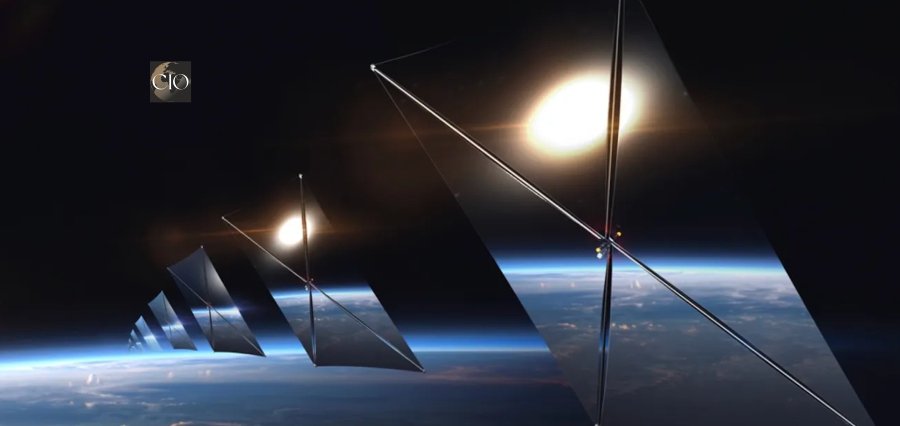
Co-founder and CEO Ben Nowack said the technology gives users direct control over sunlight. Each satellite carries reflective material folded to the size of a shoebox, which springs open in orbit to form a 60-by-60-foot mirror capable of lighting up a three-mile-wide circle on Earth.
Nowack said the potential uses are wide-ranging. Solar farms could charge overnight, crops could grow continuously, construction sites could operate around the clock, and search and rescue teams could illuminate large areas at sea with the press of a button. He described a scenario where a person overboard in the Pacific Ocean could be found more easily once the surrounding area is lit from above.
A five-minute test launch planned for later this year will allow the team to collect data and make adjustments. Initial testing will take place in remote areas, with restrictions on usage and applications.
Not everyone backs the idea without conditions. Andrew Farnsworth, who is a visiting scientist at Cornell University, had pointed out that unnatural light could affect the migration of birds, lead to bird strikes, and disrupt circadian rhythms. He urged the company to conduct thorough environmental impact studies to strengthen the concept rather than hinder it.
Nowack said light pollution concerns have been addressed, as the satellites will switch off when not in use.